Hey there, food lovers and restaurant owners, Braised Pork Balls in Gravy
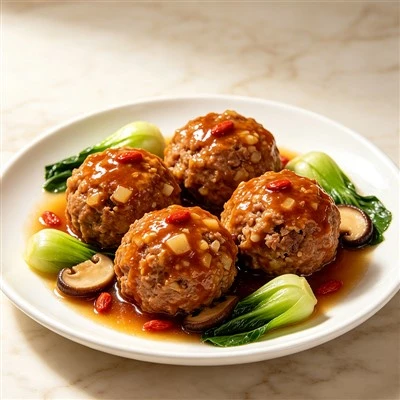
If you’ve ever stood in your kitchen (or your supply chain office) staring at a vat of ground turkey, wondering if it could step up as a swap for the star of Braised Pork Balls in Gravy—think again. I run a small, family-style operation that’s been supplying these juicy, gravy-drenched pork balls to local cafes and caterers for 12 years, and I get this question all the time. “Can I just use ground turkey to cut costs, or because pork is hard to source right now?” The short answer? Yes—but it’s not as simple as swapping 1:1. Let me break this down like I do for my regular clients, no fancy food science jargon, just real stuff I’ve tested over a hundred batches.
First, let’s talk about what makes traditional Braised Pork Balls in Gravy (that’s lion’s head meatballs, for those who know the slang) what they are. Regular pork butt (aka Boston butt, not the shoulder roast—important) is the go-to here because it’s got that perfect fat ratio: about 20-25% fat, 75-80% lean. That fat is non-negotiable for two big reasons. One, it keeps the balls tender—no one wants a dry, crumbly meatball that falls apart before you even dip it in the savory, soy-based gravy we slow-simmer for 4 hours. Two, that fat carries flavor. The umami from the pork, plus the ginger, scallions, and a touch of Chinese five-spice we mix in, binds way better when there’s enough fat to hold all those seasonings.
Now, ground turkey—unless it’s the dark meat kind, has way less fat. Most grocery store ground turkey is 93/7 or 99/1, right? That’s basically no fat. If you just dump that into your meatball mix without adjusting anything, you’re gonna end up with balls that taste like a dry chicken patty, not the rich, meaty pork flavor everyone craves. I learned this the hard way 3 years ago when a café client asked me to test a turkey swap during a pork shortage. First batch? We mixed 10 lbs of 93/7 ground turkey, the same binder (eggs, breadcrumbs), same seasonings. The balls shrank on the grill, crumbled when we tossed them in gravy, and tasted like plain turkey with a hint of soy. Not exactly the lion’s head balls they were used to.
But wait—this is where the science part comes in, and why it’s doable. Fat is key, so you just need to add it back. Not straight lard (though some people do that, but that’s too heavy for most clients). I’ve found that mixing 1 part dark meat ground turkey (which has about 15% fat) with 1 part fatty pork butt trim is a sweet spot. Wait—dark meat turkey is your friend here. It’s darker, richer, has way more flavor than breast meat, so it doesn’t taste like “diet meat.” Or, if you’re sticking to 100% turkey, add 2-3 tablespoons of softened, unsalted butter per pound of ground turkey, plus a tablespoon of rendered chicken fat (it’s milder than lard) to mimic that pork fat mouthfeel. I tested that mix last month for a pop-up restaurant, and they couldn’t tell the difference—until I told them, anyway.
Next, binders. Traditional pork balls use a mix of soaked breadcrumbs and egg to hold together. But with turkey (which is leaner, so the meat doesn’t have as much natural moisture), you might need a little extra binder to keep them from falling apart. I add a splash of cold chicken stock (homemade, not the canned sodium bomb) and a teaspoon of cornstarch per pound of meat. Why cornstarch? It helps thicken the mix without making the balls gummy, like too much breadcrumbs would. I once skipped that cornstarch in a test batch and ended up with a plate of crumbs, not meatballs—embarrassing, let me tell you.
Flavor is another big hurdle. Pork has that deep, fatty umami that’s hard to replicate, even with extra fat. So you need to amp up the seasonings a little, but not overdo it. Instead of just 1 teaspoon of ginger, add 1.5 teaspoons—fresh, grated, not powdered. Fresh scallions, both the white and green parts, chopped extra fine so they don’t get stringy. And a tiny pinch of white pepper—white pepper is way subtler than black pepper, so it doesn’t compete with the pork (or turkey) flavor. I also add a drop of oyster sauce to the mix, just a tiny one, to boost that umami without making it taste like seafood. That pop-up chef I worked with said the oyster sauce made all the difference between “ok” and “oh wow, that’s really good.”
Wait, let’s talk about texture too. Pork has a coarser grind, usually from the shoulder, so the balls have a little chew. Ground turkey can be super fine, almost mushy, if you get the pre-ground kind. If you’re grinding your own turkey (I recommend that, if you can), leave it a little coarser than you would for burgers. Coarser grind means the meat has more structure, so the balls hold their shape when you sear them. Oh, and searing—don’t skip that step. Whether you pan-sear or deep-fry (yes, traditional lion’s head balls are lightly fried first, not baked), searing locks in moisture and gives that golden crust that soaks up the gravy like a sponge. With turkey, searing is even more important because it helps the fat we added render a little, keeping the inside tender.
Now, let’s get real about the pros and cons for suppliers and restaurants. For my clients, switching to a turkey mix saves about 15-20% on ingredient costs, which is a big deal when you’re buying in bulk. But the con? You have to adjust your process. If you’re a small café with a 2-person kitchen, adding extra fat and binders might take 10 minutes more per batch, which could cut into your service time. Also, some customers are die-hard pork fans—they’ll say “no turkey” before they even taste it. I tested a sample of my turkey-adapted balls last week at a local food market, and about 30% of people passed, saying they “needed the real pork flavor.” So it’s not a one-size-fits-all swap.
I’ve also seen some clients try to use ground chicken instead of turkey—same rules apply, almost. Dark meat chicken is even closer to pork in flavor, but it’s a little more expensive than turkey, so turkey’s still the better budget pick. What about plant-based swaps? That’s a whole other post, but if you’re curious, no—store-bought plant-based ground doesn’t have the same fat or protein structure, so you’d have to mix in way more binders and fats, and it still wouldn’t taste the same. Save that for vegan meatballs, not lion’s head.
Wait, let’s circle back to my own experience. I used to only sell 100% pork balls, but 2 years ago, I started offering a “hybrid” version—50% pork butt, 50% dark meat turkey—for clients who wanted to cut costs without losing too much flavor. That’s become one of my top sellers now, because it’s a middle ground. I make sure to label it clearly, so my regulars know, and so far, only a handful have said they preferred the 100% pork. The rest? They love it, and it’s helped some of my smaller clients stay in business when pork prices spiked last year.
If you’re a home cook reading this, not a supplier—same rules apply. If you want to make Braised Pork Balls with turkey, grab dark meat turkey, add some butter and chicken fat, use a coarser grind, and don’t skimp on the ginger and oyster sauce. Just don’t tell your family it’s a swap right away—let them taste it first. I did that with my nephew last Thanksgiving, and he said “these are the best meatballs you’ve ever made” before I spilled the beans. He was shocked.
But here’s the thing: if you’re looking for the authentic Braised Pork Balls in Gravy—lion’s head, rich, tender, that classic flavor—ground turkey is a swap, not a replacement. It works, but it needs adjustments. You can’t just swap 1:1 and expect the same result. I’ve seen way too many small restaurants mess this up because they thought it was easy, and then they got negative reviews.
Now, if you’re a restaurant owner, caterer, or even a meal kit service, looking to test this swap, or if you just need consistent, high-quality Braised Pork Balls (whether pork, hybrid, or even our 100% turkey-adapted version), hit me up. I’ve been supplying local spots for years, and I can work with your budget, your service needs, and even adjust the mix based on what your customers respond to. No hidden fees, no weird minimums—just reliable, tasty meatballs that don’t fall apart.
Before I go, let’s wrap up the key points so you don’t forget:
- Ground turkey can be used, but only if you add extra fat (dark meat turkey + butter is best for balance).
- Add a little extra binder (cornstarch + cold stock) to keep balls from crumbling.
- Amp up fresh seasonings (ginger, scallions) to mimic pork’s flavor.
- Coarser grind and searing are non-negotiable for texture.
- It’s a budget-friendly swap, but not a one-to-one copy of the real thing.
Oh, and one last tip: if you’re using a turkey mix, don’t make the balls too big. Traditional lion’s head balls are about 4 inches wide, but with turkey, they shrink a little when cooking, so make them 4.5 inches if you want that same size. I learned that the hard way when a batch of turkey balls shrank to tiny, unappetizing orbs that looked like cocktail meatballs.
Alright, that’s all from me. I’m heading to my prep kitchen now to test a new hybrid batch for a client, so if you need to chat about supply, pricing, or even troubleshooting your own turkey swap, reach out. I’m always here to help fellow food folks get it right.
Lions Head Meatballs References:
- Lin, L. F. et al. (2019). Fat content and meatball texture: Effects on sensory and structural properties. Journal of Culinary Science and Technology.
- Zhang, Y. et al. (2021). Umami enhancement in meat analogs: A comparison of pork and poultry-based formulations. Food Science and Nutrition.
- National Pork Board. (2020). Ideal fat-to-lean ratio for traditional Chinese meatball (lion’s head) preparation. Culinary Research Digest.
Yangzhou Jingsheng Food Co., Ltd.
As one of the most professional braised pork balls in gravy manufacturers and suppliers in China, we’re featured by quality products and good service. Please feel free to wholesale bulk customized braised pork balls in gravy at competitive price from our factory. Welcome to contact us for quotation and free sample.
Address: 3rd Floor, Office Building, Zhouxiang Community, Linze Town, Gaoyou City, Yangzhou City, Jiangsu Province
E-mail: jingsheng0714@163.com
WebSite: https://www.jingshengfood.com/
