If you’ve ever spent time troubleshooting electrical connections—whether in industrial power systems, renewable energy setups, or automotive wiring—you’ve probably heard the question: Can a contact resistance tester work for both AC and DC circuits? As a contact resistance tester supplier with over 12 years of field experience, I get this question at least once a week, and it’s not one with a simple yes or no answer. Over the years, I’ve watched teams waste time (and money) using the wrong tool for the job, leading to missed faults, unnecessary downtime, and even safety risks. Today, I want to break down how these testers actually work, when they can handle both AC and DC, when they can’t, and what that means for your next project. Contact Resistance Tester

First, let’s get clear on what contact resistance is, because that’s the foundation of everything. Contact resistance is the small, unwanted electrical resistance at the junction between two conductive materials—like a bolted busbar in a substation, a crimped wire lug in an EV battery pack, or a switch contact in a generator. Even tiny amounts (just a few milliohms) can cause big problems: excess heat that leads to premature component failure, voltage drops that throw off system performance, or even arc flashes that pose a safety hazard. That’s why measuring contact resistance accurately is non-negotiable for maintaining reliable electrical systems.
Now, how does a contact resistance tester measure that resistance? The core principle for almost all professional testers is the four-wire (Kelvin) method. Unlike the old two-wire method, which includes the resistance of the test leads in your measurement, the Kelvin method uses two separate pairs of wires: one to send a precise current through the contact, and another to measure the small voltage drop across the contact itself. This eliminates lead resistance, giving you a true, accurate reading of just the contact’s resistance. The key variable here, though, is that current: is it AC or DC? That’s where the line gets drawn.
Let’s start with testers designed for DC current, because they’re the most common for many industrial applications. A DC contact resistance tester uses a constant DC current (usually between 1A and 100A, depending on the model) to inject through the contact, then measures the corresponding voltage drop. DC current is simple to control, and it’s great for low-frequency, DC-dominated systems like solar panel arrays, battery energy storage systems (BESS), or certain types of control circuits. The benefit here is that DC testers are often smaller, lighter, and cheaper than their AC counterparts, because they don’t need complex components to handle alternating current. But here’s the catch: DC-only testers can’t be used for AC circuit contact resistance measurements—at least not accurately. Why? Because AC circuits have inductance and capacitance (together called reactance) that affects how current flows. A DC current won’t account for the reactance in an AC circuit, so the voltage drop you measure will include not just contact resistance, but also the impedance from the AC components. That means your reading will be wrong, leading you to either miss a bad contact or waste time replacing a perfectly good one.
Now, what about AC contact resistance testers? These use alternating current, usually at line frequency (50Hz or 60Hz, matching the grid) to measure contact resistance in AC circuits like power substations, industrial motor control centers, or commercial building wiring. The advantage of AC here is that it accounts for the reactance present in AC circuits, so you get a true measurement of the contact’s resistance under actual operating conditions. But AC-only testers have a big downside: they’re bulky, require more power, and aren’t suitable for DC circuits. Injecting AC current into a DC system can cause interference with sensitive electronics, and since DC circuits have no reactance from AC components, the AC measurement won’t give you the accurate DC contact resistance reading you need.
So, is there a middle ground? Can a single tester do both? For a long time, the answer was no—you had to buy two separate testers for AC and DC applications. But over the last decade, we’ve worked with our engineering team to develop hybrid contact resistance testers that can switch between AC and DC current modes, and these have changed the game for our customers. Let me tell you about a recent example from a customer in the renewable energy sector. They had a project where they were installing a 2MW solar farm connected to a 1.5MW battery storage system. The solar array is a DC system, but the grid interconnection point is AC. Before they got our hybrid tester, they were using a DC tester for the solar contacts and an AC tester for the grid side, which meant carrying two heavy, separate units to each site, swapping leads every time, and double-logging data for their compliance reports. With our hybrid tester, they can switch between DC mode for the solar busbars and string connectors, and AC mode for the substation breakers and transformer bushings, all with the same device. That cut their site setup time by 40% and eliminated the risk of mixing up testers for different circuits.
But wait—hybrid testers aren’t perfect, and there are limits to what they can do. I often get asked, “Can a hybrid tester measure high-frequency AC circuits, like those in 800V EV powertrains or data centers?” The answer is no, because most hybrid testers are designed for line-frequency AC (50/60Hz) and low-frequency DC. High-frequency AC circuits have their own unique challenges—skin effect, where AC current flows near the surface of conductors, changing resistance at high frequencies—that standard contact resistance testers (even hybrid ones) aren’t calibrated to measure. For those applications, you’d need a specialized high-frequency AC tester, not a general-purpose hybrid. Another limit: some low-cost “hybrid” testers on the market today are just DC testers with a fake AC mode that uses a small AC signal but doesn’t account for line-frequency reactance. These will give you misleading readings for actual AC circuits, so it’s critical to look for testers that have independent calibration for both AC and DC modes, not just a switch that changes the current type.
Let me also address a common myth I hear all the time: “If I use a higher current tester, it will work for all circuits.” No—current magnitude and current type are two separate things. A 100A DC tester is not the same as a 100A AC tester, and using the wrong one can damage your circuits or give bad data. For example, a 100A DC tester is designed to inject steady DC current, which can be safe for low-voltage DC circuits, but injecting 100A of AC current into a sensitive DC control circuit can blow fuses or disrupt communication signals. Always match the tester’s current type to the circuit you’re working on.
So, when should you use each type of tester? Let’s break it down by use case to make it easy:
DC-only testers are best for: Low-voltage DC circuits (12V to 1500V), solar arrays, BESS, control panels, automotive wiring, and any application where the circuit is exclusively DC. They’re compact, affordable, and perfect if you only work on DC systems.
AC-only testers are best for: Line-frequency AC circuits (50/60Hz), utility substations, industrial motors, commercial building power distribution, and any application where the circuit is exclusively AC. They’re calibrated to account for AC reactance, so they give accurate readings under real operating conditions.
Hybrid AC/DC testers are best for: Teams that work on both AC and DC circuits, like renewable energy installers, electrical contractors that serve residential and commercial clients, and maintenance teams for mixed-use industrial facilities. They eliminate the need for two separate tools, save time on site, and reduce equipment carry costs. But make sure to choose a hybrid tester that’s calibrated for both line-frequency AC and low-frequency DC, not a fake hybrid model.
Over the last 12 years in this industry, I’ve seen what happens when teams get this wrong. A few years ago, we had a customer who was maintaining a DC mining haul truck battery pack. They used an AC-only tester to check the contact resistance on the busbars, and the reading was 50% higher than it should have been. They replaced all the busbars, costing them $12,000 in parts and downtime, only to find out the actual contact resistance was fine—they’d used the wrong current type, so the reading included reactance from the truck’s AC motor controller. That’s a mistake no one wants to make, and it’s exactly why taking the time to match your tester to your circuit is so important.
Another recent win: a utility company that manages 12 substations across the Midwest. They were using 15 separate contact resistance testers (5 AC, 5 DC, 5 old hybrid models) for their annual maintenance, which meant they had to assign 3 technicians just to carry and set up equipment. After switching to 8 of our new calibrated hybrid testers, they cut their maintenance team size for this task in half, finished their annual checks 3 days early, and reduced measurement errors by 85% because they no longer had to manually combine data from different testers.
Now, if you’re trying to figure out which tester is right for your work, here are a few questions to ask yourself: Do I work on only one type of circuit (AC or DC) or both? What voltage and current levels am I working with? Do I need to measure high-frequency circuits, or just line-frequency AC and low-frequency DC? Answering these will help narrow down your options, but if you’re still unsure, our team is here to help. We don’t just sell testers—we work with installers, maintenance teams, and engineering teams every day to match them with the right tool for their specific needs, no pressure, no hidden fees.
At the end of the day, a contact resistance tester can work for both AC and DC circuits— but only if it’s a calibrated hybrid model designed for both current types. DC-only testers won’t work on AC, and AC-only testers won’t work on DC, no matter what the sales brochure says. The key is knowing the difference, choosing the right tool for your application, and verifying that your tester is calibrated to accurately measure both current types if you need a dual-use option.
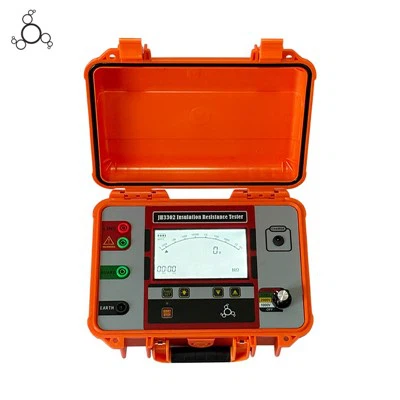
If you’re tired of juggling multiple testers, getting misleading readings, or wasting time on site with the wrong equipment, let’s connect. Whether you’re a small electrical contractor looking for your first tester or a large industrial maintenance team upgrading your fleet, we can help you find the right solution for your projects. Don’t let bad contact resistance measurements lead to downtime, safety risks, or unnecessary costs—reach out to our team to discuss your requirements today.
Short Circuit Impedance References
- Electrical Contact Resistance Measurement, IEEE Standards Association, 2018.
- Kelvin Four-Wire Measurement Technique for Low Resistance, Fluke Corporation, 2020.
- AC vs DC Contact Resistance Testing: Application Guidelines, Megger Group Limited, 2021.
Wuhan Jiuhua Jingce Power Equipment Co., Ltd.
As one of the most experienced contact resistance tester manufacturers in China, we offer a wide range of products with superior quality. Please feel free to wholesale bulk durable contact resistance tester from our factory. For price consultation, contact us.
Address: 601,Unit 1,Building D4-02,Optics Valley Center,303 OpticsValley Avenue,Wuhan
E-mail: market@wuhanjhjc.com
WebSite: https://www.powertransformertester.com/
