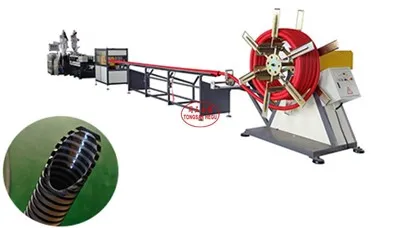
As a dedicated supplier of auxiliary equipment, I’ve witnessed firsthand the critical role that noise levels play in the selection and operation of such machinery. In this blog, I’ll delve into the noise levels associated with auxiliary equipment, exploring what impacts these levels, why they matter, and how we as a supplier can assist customers in managing noise effectively. Auxiliary Equipment
Understanding Noise Levels in Auxiliary Equipment
To begin with, it’s important to understand how noise levels are measured. Sound intensity is measured in decibels (dB), a logarithmic unit that quantifies the pressure variations of sound waves in the air. In industrial settings where auxiliary equipment is commonly used, noise levels can span a wide range. For instance, a quiet piece of equipment might operate at around 40 – 50 dB, a level comparable to a normal conversation in a quiet room. On the other end of the spectrum, certain high – power auxiliary machinery can emit noise levels upwards of 90 dB, which is roughly equivalent to the noise produced by a lawnmower.
The noise levels of auxiliary equipment are influenced by several factors. First and foremost is the design and construction of the equipment itself. The type of motors, fans, gears, and other moving parts can greatly affect the amount of noise generated. For example, older motors with less advanced insulation and vibration – dampening features tend to be noisier than their modern counterparts. The quality of the materials used in construction also plays a role; high – quality, precision – engineered components are generally quieter as they produce less friction and vibration during operation.
Secondly, the operating conditions of the equipment can impact noise levels. High – speed operation, heavy loads, and improper installation can all lead to increased noise. When an auxiliary device is pushed beyond its recommended capacity, the stress on its components causes them to vibrate more vigorously, resulting in louder noise. Similarly, if the equipment is not installed correctly, such as being placed on an uneven surface or not properly secured, it can generate additional vibrations and noise.
Why Noise Levels Matter
The importance of managing noise levels in auxiliary equipment cannot be overstated. From a regulatory perspective, many countries and regions have strict noise regulations in place to protect workers’ health and well – being. Prolonged exposure to high – level noise can cause a range of health problems, including hearing loss, tinnitus (ringing in the ears), stress, and sleep disturbances. In industrial workplaces, employers are legally obligated to ensure that noise levels are within acceptable limits. Failure to comply with these regulations can result in hefty fines and legal liabilities for businesses.
Beyond regulatory compliance, noise can also have a significant impact on productivity. Excessive noise in the workplace can be a major distraction, making it difficult for employees to concentrate on their tasks. This can lead to errors, reduced efficiency, and increased absenteeism. In addition, a noisy work environment can be a deterrent to attracting and retaining skilled workers. Employees are more likely to be satisfied and productive in a quiet, comfortable workplace.
Moreover, noise can also affect the reputation of a business. In some industries, such as food processing and pharmaceuticals, where a quiet working environment is essential for maintaining product quality and safety, noisy auxiliary equipment can be a major drawback. Customers may be less likely to do business with a company that has a noisy production facility, as it can give the impression of poor quality control and lack of professionalism.
Noise Levels of Common Auxiliary Equipment
Let’s take a closer look at the noise levels associated with some common types of auxiliary equipment.
Air Compressors
Air compressors are widely used in industrial applications, from powering pneumatic tools to providing compressed air for manufacturing processes. Depending on their size, capacity, and design, air compressors can produce noise levels ranging from 60 – 90 dB. Smaller, single – stage compressors typically operate at the lower end of this range, while larger, multi – stage compressors with higher output capacities can be much louder. To reduce noise, modern air compressors are often equipped with sound – enclosing cabinets, vibration – isolation mounts, and advanced intake and exhaust silencers.
Cooling Fans
Cooling fans are essential for maintaining proper operating temperatures in many types of equipment. These fans can generate noise levels anywhere from 30 – 70 dB, depending on their size, speed, and the type of blade design. Axial fans, which are commonly used for general ventilation, tend to be noisier than centrifugal fans, especially at high speeds. To minimize noise, manufacturers can use fan blade designs that are optimized for quiet operation, as well as incorporate fan speed control mechanisms to adjust the fan’s output based on the actual cooling requirements.
Conveyor Systems
Conveyor systems are used for transporting materials within a production facility. The noise levels of conveyor systems vary depending on the type of conveyor (e.g., belt conveyor, roller conveyor), the speed of operation, and the nature of the materials being transported. A typical belt conveyor might produce noise levels in the range of 60 – 80 dB, while a high – speed roller conveyor can be louder. To reduce noise, conveyor systems can be equipped with noise – reducing bearings, smooth – running belts, and vibration – dampening mounts.
How Our Company Can Help
As a leading supplier of auxiliary equipment, we are committed to providing our customers with products that meet the highest standards of performance and noise control. We work closely with our manufacturers to ensure that our equipment is designed and built with noise reduction in mind.
One of the ways we assist our customers is by offering a wide range of low – noise auxiliary equipment. Our product portfolio includes air compressors with advanced sound – proofing features, cooling fans with optimized blade designs, and conveyor systems with noise – reducing components. We also provide detailed noise level specifications for all our products, allowing our customers to make informed decisions based on their specific noise requirements.
In addition to supplying low – noise equipment, we offer professional installation and maintenance services. Our team of experienced technicians is trained to install auxiliary equipment correctly, ensuring that it operates at its optimal performance while minimizing noise. We also provide regular maintenance and servicing to keep the equipment in good condition, as well as to identify and address any potential noise – related issues before they become major problems.
We understand that every customer’s needs are unique, and we are willing to work closely with our clients to develop customized noise – control solutions. Whether it’s designing a special enclosure for a noisy piece of equipment or recommending a combination of low – noise products for a specific application, our goal is to help our customers achieve a quiet and efficient working environment.
Conclusion
In conclusion, noise levels associated with auxiliary equipment are an important consideration for businesses across various industries. Understanding the factors that influence noise levels, the potential impacts of excessive noise, and the noise characteristics of different types of auxiliary equipment is crucial for making informed purchasing decisions.
PP Hollow Sheet Machine As a trusted supplier of auxiliary equipment, we are dedicated to helping our customers manage noise effectively. We offer high – quality, low – noise products, professional installation and maintenance services, and customized noise – control solutions. If you are in the market for auxiliary equipment and are concerned about noise levels, we encourage you to reach out to us. Our team of experts is ready to assist you in finding the right solutions for your specific needs. Contact us today to start a discussion about your procurement requirements and let us help you create a quieter, more productive workplace.
References
- "Industrial Noise Control and Acoustics" by Clarence W. Koopmann.
- National Institute for Occupational Safety and Health (NIOSH) guidelines on occupational noise exposure.
- Sound and Vibration Handbook, 5th Edition, edited by Malcolm J. Crocker.
Qingdao Tongsanhegu Plastic Machinery Manufacturing Co., Ltd.
With abundant experience, we are one of the most reliable auxiliary equipment manufacturers and suppliers in China. We warmly welcome you to buy durable auxiliary equipment for sale here from our factory. Quality products and reasonable price are available.
Address: West of Xixinzhi Village, Sanlihe District Jiaozhou, Qingdao City, Shandong Province, China
E-mail: info@tongsanhegu.com
WebSite: https://www.tongsanhegumachine.com/
