Yo, what’s up everyone! I’m a supplier of PVC tarpaulin, and I often get asked this question: "Is PVC tarpaulin resistant to chemicals?" Well, let’s dive right into it and break it down. PVC Tarpaulin
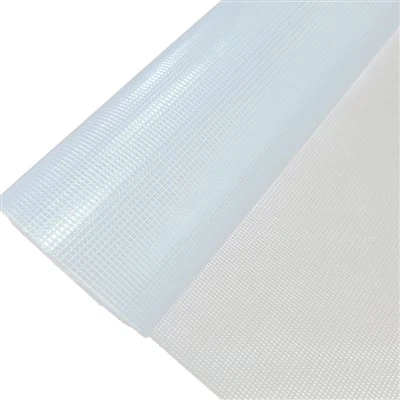
First off, let me give you a bit of background on PVC tarpaulin. PVC stands for polyvinyl chloride, which is a type of plastic. PVC tarpaulin is made by coating a fabric base, usually polyester, with a layer of PVC. This combination gives it a whole bunch of great properties like being waterproof, durable, and tear – resistant. But when it comes to chemical resistance, it’s a bit more complicated.
PVC tarpaulin has some level of resistance to a variety of common chemicals. For example, it can handle mild acids and alkalis pretty well. If you’ve got a light – duty cleaning solution with a bit of acidic or alkaline nature, the PVC tarpaulin can withstand it without getting damaged quickly. Mild acids like acetic acid, which is found in vinegar, won’t eat through the PVC right away. And weak alkalis, say, a solution with a bit of baking soda, also don’t pose an immediate threat.
Let’s talk about the mechanism behind this. The PVC coating on the tarpaulin acts as a barrier. It forms a dense layer that prevents many chemicals from seeping through to the fabric base. The long – chain polymer structure of PVC makes it difficult for small chemical molecules to penetrate easily.
In industrial settings, PVC tarpaulin is often used to cover chemical storage areas. It can protect the stored chemicals from the elements, and at the same time, resist the minor spillage or fumes from those chemicals. For instance, in a factory that stores some less – reactive industrial solvents, PVC tarpaulin can be used as a cover for the storage containers. It can hold up against the vapors of these solvents, keeping the containers dry and protected.
However, it’s important to note that PVC tarpaulin is not invincible against all chemicals. There are some chemicals that can really mess it up. Strong concentrated acids, like sulfuric acid or hydrochloric acid, are a big no – no. These acids can react with the PVC and break down its structure. You’ll start seeing the tarpaulin becoming brittle, discolored, and eventually, holes may form.
Similarly, strong alkalis can also cause problems. Sodium hydroxide in high concentrations can attack the PVC. It can start to corrode the coating, making it less effective as a protective layer. And then there are some organic solvents. Chlorinated solvents like carbon tetrachloride or trichloroethylene can dissolve the PVC over time. These solvents have molecules that are very good at interacting with the PVC polymer chains, causing them to break apart.
Now, if you’re using PVC tarpaulin in an environment where it might come into contact with chemicals, there are a few things you can do to increase its chemical resistance. One option is to apply a special chemical – resistant coating on top of the regular PVC coating. This extra layer can provide an additional barrier against chemicals. Another thing is to choose a thicker PVC tarpaulin. Thicker tarpaulins generally have more material to withstand chemical attacks, so they’ll last longer.
As a PVC tarpaulin supplier, I’ve seen a lot of different applications. Some customers use it for agricultural purposes. In farms, they might need to cover fertilizers or pesticides. In these cases, the tarpaulin needs to resist the chemicals in these products. For the most part, as long as these are not super – concentrated chemicals, our PVC tarpaulins can do the job well.
Others use it in construction sites. There are often various chemicals on construction sites, like paint solvents, concrete additives, etc. Our tarpaulins can protect building materials and equipment from these chemicals. But again, if there’s a major spill of a highly reactive chemical, we always recommend taking immediate action to clean it up and check the condition of the tarpaulin.
I’ve also had customers in the transportation industry. They use PVC tarpaulins to cover trucks carrying chemical products. In this situation, the tarpaulin needs to be able to handle any possible leaks or splashes during the journey. We’ve designed our tarpaulins to be tough enough for such applications, but it still depends on the type of chemicals being transported.
So, to sum it all up, PVC tarpaulin has a certain degree of chemical resistance. It can handle mild acids, alkalis, and some common industrial solvents. But it’s not suitable for use with strong concentrated chemicals or highly – reactive organic solvents. Before using PVC tarpaulin in a chemical – intensive environment, it’s crucial to assess the type of chemicals it’ll be exposed to.
If you’re in the market for PVC tarpaulin and are worried about its chemical resistance for your specific application, don’t hesitate to reach out. We’re here to help you choose the right product. Our team of experts can answer all your questions and give you detailed advice based on your needs. Whether you need it for a small – scale project or a large – scale industrial application, we’ve got you covered. So, if you’re interested in purchasing PVC tarpaulin, just get in touch, and let’s have a chat about how we can meet your requirements.
PVC Printing Film References:
- "Plastic Materials" by J. A. Brydson
- "Handbook of Polymer Science and Technology" by Herman F. Mark
Nantong Dahe Composite New Material Technology Co., Ltd.
We’re well-known as one of the leading PVC tarpaulin manufacturers and suppliers in China, specialized in providing high quality customized products to global clients. Please feel free to wholesale cheap PVC tarpaulin in stock here from our factory. Contact us for quotation and free sample.
Address: South Side of Pinghai Highway, Pinghe Village, Dongshe Town, Tongzhou District, Nantong City, Jiangsu Province, China
E-mail: nantongdahe@outlook.com
WebSite: https://www.cndahetech.com/
