If you’ve ever worked in metallurgy, electronics, solar energy, or even agriculture, you’ve likely interacted with FeSi series products—silicon-iron alloys that form the backbone of dozens of industrial processes I’ve supplied as a vendor for over 12 years. When I first started in this business, I thought FeSi was just a single, gray, brittle metal alloy, but over time I’ve learned the “series” part is critical: FeSi products come in tailored grades, each with a precise mix of iron, silicon, and trace elements, designed for specific, high-stakes applications where even a tiny deviation can ruin a batch or a final product. Today, I’m breaking down the main uses of FeSi series products, straight from the perspective of someone who packs, ships, and stands behind every batch that leaves our warehouse. FeSi Series Products

The most widespread application by far is in steelmaking, and that’s where FeSi’s unique properties shine brightest. Steelmakers have relied on FeSi for decades because silicon has a high affinity for oxygen—so when you add FeSi to molten steel, it acts as a powerful deoxidizer. Before deoxidation, molten steel is full of tiny oxygen bubbles that cause porosity, weakness, or even cracks as the metal solidifies. FeSi reacts with that dissolved oxygen to form silica, which rises as a harmless slag that can be skimmed off. But that’s not all: FeSi also boosts steel’s strength, hardness, and resistance to corrosion. For example, low-carbon FeSi (typically 10 to 15% silicon content) goes into manufacturing automotive body steel, where a balance of flexibility and rigidity is non-negotiable—no driver wants a car frame that bends in a minor collision, or one that rusts through in five years. Higher-grade FeSi (75% silicon content) is used for specialty steels, like those used in wind turbine gearboxes or construction rebar, where extreme durability is required. Last year, I worked with a steel mill in the Midwest that ordered 200 tons of 75% FeSi specifically for their rebar production; they told me switching to a lower grade would have increased their product rejection rate by 12%, a number that would have cost them hundreds of thousands of dollars in lost revenue. That’s the kind of impact FeSi has that most people outside the industry never see.
Next, FeSi series products are a core component in the production of aluminum and other non-ferrous metals, a use that’s grown exponentially in the last 10 years as industries shift toward lighter, more energy-efficient materials. Aluminum producers use FeSi not just as a deoxidizer—same as steelmakers—but also as an alloying agent to refine the aluminum’s grain structure. When you add FeSi to molten aluminum, the silicon particles act as nucleation sites, meaning they trigger the metal to solidify into smaller, more uniform grains. Smaller grains make aluminum stronger, less likely to crack during machining, and better able to withstand high temperatures. For aerospace manufacturers, who rely on aluminum for aircraft fuselages and wing parts, this is a game-changer: a 10% improvement in aluminum’s tensile strength can reduce an aircraft’s overall weight by several hundred pounds, which translates to significant fuel savings over the life of a plane. I also supply FeSi to magnesium producers, another growing industry; magnesium is the lightest structural metal, but it’s prone to oxidation. FeSi’s deoxidizing properties prevent magnesium from reacting with oxygen during production, reducing waste and improving the final product’s purity.
The solar energy sector is a more recent but fast-growing application for FeSi series products, and it’s one I’m especially proud to be part of. Solar panels rely on high-purity silicon to convert sunlight into electricity, but that pure silicon (known as polysilicon) starts as a raw material that’s refined using FeSi as a key input. Here’s how it works: FeSi is reacted with hydrochloric acid to produce trichlorosilane, a chemical intermediate that’s then purified and processed into polysilicon ingots. The quality of the FeSi used here is make-or-break—even trace impurities like aluminum or phosphorus can reduce the polysilicon’s efficiency, making solar panels less productive. That’s why our team tests every batch of FeSi for solar applications three times before it ships: first at our in-house lab, then at a third-party testing facility, and finally at the production site to confirm it meets the exact purity standards solar manufacturers require. Over the past five years, solar orders for FeSi from our company have increased by 180%, which I think is a direct result of the global push for renewable energy. Last month, a solar panel manufacturer in Arizona ordered 150 tons of FeSi specifically for their new 2GW polysilicon production line, and they told me we were one of only three suppliers that could meet their tight delivery and purity requirements.
Another key use of FeSi series products is in the chemical industry, where they’re used to produce a range of specialty chemicals and catalysts. For example, FeSi is a raw material for making silicones, which are used in everything from sealants for construction sites to lubricants for industrial machinery. Silicones rely on silicon from FeSi to form their molecular structure, and the grade of FeSi determines the silicone’s durability and temperature resistance. I also supply FeSi for the production of ferrosilicon powder, which is used as a reducing agent in the manufacturing of other chemicals, like titanium dioxide, a compound used in paints, plastics, and food additives. What I appreciate about this application is that it’s not just for big factories—smaller specialty chemical producers also rely on FeSi, and I’ve worked with companies that order as little as a 50-pound batch, a reminder that even the smallest orders matter.
Agriculture is a surprising but important final application of FeSi series products, especially for soil amendment. Silica is a essential nutrient for many plants, helping them build stronger cell walls, resist pests and drought, and improve overall growth. FeSi is processed into a fine powder that, when applied to soil, slowly releases silicon as it breaks down, giving crops a steady supply of the nutrient. For rice farmers, in particular, this is a game-changer: rice absorbs a lot of silicon from soil, and adding FeSi-derived silica can increase crop yields by up to 20%, according to the agricultural researchers I work with. I’ve supplied FeSi to rice farms in the Mississippi Delta for over seven years, and one farmer told me last season that using our FeSi amendment helped him produce 15% more rice than the previous year, even during a drought. It’s a reminder that FeSi’s impact isn’t just in factories—it’s on farm fields that feed communities.
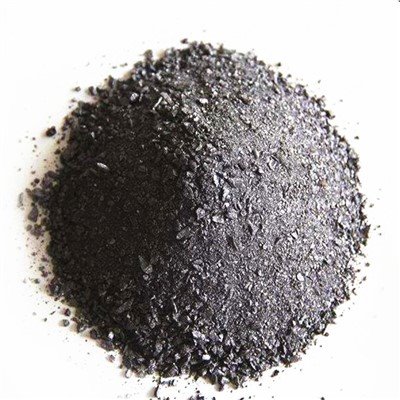
At the end of the day, every batch of FeSi series products we supply serves a purpose that matters. Whether it’s a steel beam holding up a skyscraper, a solar panel powering a home, or a rice crop feeding a family, FeSi is a quiet, essential part of the supply chain. If you’re looking for a reliable partner for your FeSi series product needs—whether you’re a steel mill, solar manufacturer, chemical producer, or agricultural operation—we’re here to help. We offer a range of FeSi grades tailored to your exact specifications, with consistent quality, on-time delivery, and personalized support from a team that knows this industry inside and out. Contact our team to discuss your requirements and get a quote that fits your budget and timeline.
High Carbon Silicon References
- Materials Science and Engineering: An Introduction, Callister, W.D.
- Silicon in Agriculture, Datnoff, L.E., et al.
- Steelmaking: Principles and Practice, Robertson, D.G.C.
- “Global Ferrosilicon Market Report 2024,” Market Research Future.
- Polysilicon Production: Processes and Challenges, Zhang, Y., et al.
Anyang Baitengxin Metal Co., Ltd.
As one of the most professional fesi series products manufacturers in China, we have world-leading production equipment and strong manufacturing capabilities. Please feel free to buy high quality fesi series products for sale here from our factory. Good service and reasonable price are available.
Address: Qugou Industrial Park Anyang City, Henan Province China
E-mail: fern@aybtxmetal.com
WebSite: https://www.aybtx-metal.com/
