Hey there, let’s cut to the chase if you’re here asking about the oxygen production rate of a small air separation unit (ASU) — you’re probably not a big factory scouting for a 100-ton industrial behemoth. You might be a small medical clinic, a food processing shop that needs to package fresh produce, a metal fabrication shop doing small-scale welding, or even a research lab with limited space. That’s exactly the crowd we build our small units for, so I’ve got the straight, no-fluff breakdown you need. Small Air Separation Unit
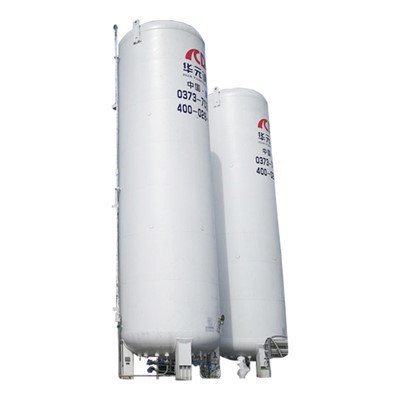
First off, let’s define “small” because that term gets thrown around a lot. For ASUs, “small” usually means units that produce less than 10 tons per day (TPD) of oxygen. But even within that, there’s a range, and the production rate isn’t a one-size-fits-all number. It depends on three big things: the type of small ASU you get, its size and power, and the purity of oxygen you need.
Let’s start with the main types of small ASUs. Most small units fall into two categories: pressure swing adsorption (PSA) and membrane-based. PSA is way more common for small-to-medium applications because it’s reliable, doesn’t need super expensive cryogenics (that’s the super cold stuff big ASUs use), and is easier to maintain. Membrane units are even smaller, often compact enough to fit on a workbench, but they max out at lower production rates.
For PSA small ASUs — the ones we sell most of — the oxygen production rate typically ranges from 0.1 TPD all the way up to 10 TPD. Wait, let’s translate that to something more relatable if you’re not used to tons per day. 1 TPD is about 14 cubic meters per hour (m³/h) of oxygen at standard pressure, right? So a tiny 0.1 TPD unit is like 1.4 m³/h, which is enough for a small clinic with 2-3 beds that need supplemental oxygen, or a small aquarium shop with a few tanks that need extra aeration for rare fish. A 5 TPD PSA unit is around 70 m³/h — perfect for a local bakery that packages artisanal bread to extend shelf life, or a small metal shop doing occasional steel welding. The max 10 TPD small PSA unit we make? That’s for a mid-sized restaurant that runs a line of sous-vide prep, or a small manufacturing line that needs oxygen for chemical reactions.
Now membrane units — those are the super compact ones. Their oxygen production rate is lower, usually between 0.01 TPD and 0.5 TPD, which is 0.14 m³/h to 7 m³/h. These are great if you have super limited space, like a mobile dental clinic, a small lab that runs tests, or even a greenhouse that needs to boost oxygen for hydroponic plants. But the tradeoff with membrane units is purity: membrane oxygen is usually 95% or less, while PSA units can hit 90-99.5% purity. That’s a big deal if you’re using oxygen for medical purposes — medical-grade needs to be at least 90%, so a membrane unit might work, but a PSA is more reliable for long-term medical use.
Wait, let’s talk about how purity affects production rate, because that’s a mistake a lot of first-time buyers make. If you need higher purity, your production rate goes down. For example, a PSA unit that makes 5 TPD at 93% purity might only put out 4.2 TPD if you crank the purity up to 99.5%. That’s because the process of separating oxygen from nitrogen in the air relies on either adsorbing nitrogen (for PSA) or letting oxygen pass through a polymer membrane (for membrane units) — the tighter you make that separation for pure oxygen, the less of it you produce per unit of air fed into the unit. So if your end use is picky about purity (like medical or pharmaceutical applications), you’ll have to adjust for that.
Another factor: power supply. Small ASUs run on standard electricity — no need for industrial 3-phase power, most plug into a 110V or 220V outlet. But if your power is inconsistent, that can throw off production rates. Our units are built to handle slight voltage fluctuations, but if you’re in an area with frequent brownouts, you might want to opt for a slightly larger unit to compensate, or get a backup generator. We test every unit before it leaves our shop, so we can tell you exactly what power requirements you need to hit to get the rated production rate.
Let me throw out some real-world examples to make this concrete, because numbers are useless if you don’t know what they mean. Last month, we sold a 0.2 TPD PSA unit to a small urgent care clinic in a rural town. They had 4 beds, and before our unit, they were renting oxygen tanks every week, which was expensive and a hassle. Our unit produces 2.8 m³/h of 93% purity oxygen, which is enough for all 4 beds, and it runs 24/7 for about $50 a month in electricity — way cheaper than renting. Then there’s a local craft brewery we supplied a 1.5 TPD unit to; they use oxygen to speed up the fermentation process for their lagers, cutting brew time by 3 days. That unit puts out 21 m³/h, which is more than enough for their 10-barrel brewing system. We’ve even got a 8 TPD unit going to a small metal fabrication shop that does structural steel work for local construction projects — they needed consistent oxygen for their cutting torches, and the small unit is way more affordable than the big cryogenic ASUs they were looking at.
A lot of people ask us why small ASUs are better than renting oxygen tanks. For one, it’s a one-time investment (well, plus maintenance, but that’s minimal) instead of ongoing rental costs. For another, you never have to worry about running out of oxygen — the unit runs as long as it’s plugged in, and you can set it to fill a storage tank so you have a backup. The production rate of a small ASU is designed to match the demand of small operations, so you’re not paying for more than you need.
Wait, let’s clear up a common myth: some people think “small” ASUs can’t keep up with high demand, but that’s not true if you pick the right size. If your demand is 10 m³/h, a 1 TPD unit (14 m³/h) is perfect — it’s not running at full capacity, which is actually better for the unit’s lifespan. If you get a unit that’s too big, it’ll cycle on and off a lot, which wears out parts faster. That’s why we work with every customer to calculate their exact oxygen needs before recommending a unit.
So how do you calculate your own oxygen demand if you’re not sure? Let’s break it down. For medical use: each adult needs about 0.5-1 L/min of oxygen, so 1 bed is 0.03-0.06 m³/h, 10 beds is 0.3-0.6 m³/h. For food packaging: it depends on the type of food, but for fresh produce, you need about 1-5% oxygen in the packaging atmosphere, so a 1,000 sq ft bakery might need 5-10 m³/h. For metal cutting: a single cutting torch uses about 3-5 m³/h of oxygen, so if you have 2 torches running at once, you need 6-10 m³/h. Our team can help you with this calculation no problem — we’ve done it hundreds of times for different industries.
Now, what about maintenance for small ASUs? That’s a big one, because a unit is only as good as its upkeep. Small PSA units need filter changes every 6-12 months, and the adsorbent material (the stuff that separates nitrogen from oxygen) lasts 10-15 years. Membrane units have similar maintenance, just the membrane needs replacing every 5-7 years. None of that is complicated — our team can walk you through it, or even set up a scheduled maintenance plan if you don’t want to handle it yourself.
At the end of the day, the oxygen production rate of a small ASU isn’t a fixed number — it’s tailored to your needs. The key is to match the unit’s type, size, and purity to what you’re using the oxygen for. If you’re not sure where to start, don’t guess — talk to someone who actually builds these units, not a sales rep for a big industrial company that doesn’t get your small-business needs. We’ve been making small ASUs for years, and we know how to pick the right rate for you, no fluff, no hidden fees.

If you’re tired of renting oxygen tanks, or struggling to find a reliable unit that fits your space and budget, get in touch with us. We’ll answer all your questions, help you figure out exactly what production rate you need, and walk you through every step of getting your unit up and running. No jargon, no pressure, just straight answers and solid equipment.
Specialty Gases References:
- "Pressure Swing Adsorption for Small-Scale Oxygen Generation" – Industrial & Engineering Chemistry Research, 2021.
- "Membrane-Based Oxygen Separation: Applications and Performance Limits" – Journal of Membrane Science, 2019.
- "Small Air Separation Units: Market Trends and End-Use Applications" – International Society of Automation, 2022.
Xinxiang Jiale Intelligent Equipment Co., Ltd.
As one of the leading small air separation unit manufacturers and suppliers in China, we also support customized service. Please feel free to buy high quality small air separation unit for sale here from our factory. Contact us for more details.
Address: No.3913, 9th Floor, Unit 3, East Commercial and Office Complex, Baolong City Plaza, Hongqi District, Xinxiang City, Henan Province, China
E-mail: cc2397410@gmail.com
WebSite: https://www.jialeasu.com/
