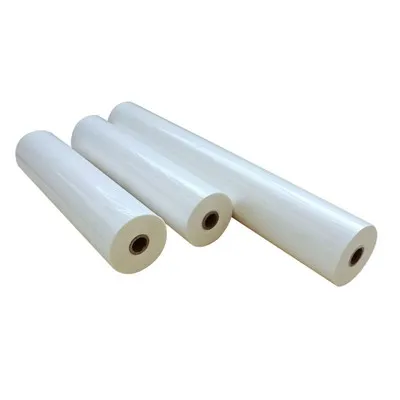
As a provider of Optical Grade PET Film Roll, I am thrilled to share insights into the intricate process of surface treatment for this remarkable product. Optical Grade PET Film Roll is widely used in various industries, including electronics, automotive, and display technology, due to its excellent optical properties and durability. The surface treatment process plays a crucial role in enhancing the film’s performance and functionality, making it suitable for specific applications. Optical Grade PET Film Roll
Step 1: Cleaning and Pre – treatment
The surface treatment process begins with a thorough cleaning and pre – treatment phase. The raw PET film may have contaminants such as dust, grease, and residual particles from the manufacturing process. These contaminants can significantly impact the adhesion of subsequent coatings and the overall optical performance of the film.
We use a combination of physical and chemical cleaning methods. The physical cleaning usually involves roller cleaning and brushing to remove large particles. For finer contaminants, we rely on chemical cleaning agents. These agents are carefully selected to be compatible with the PET film, ensuring that they do not damage the film’s structure while effectively removing contaminants.
After cleaning, the film undergoes a pre – treatment process. This can include corona treatment or plasma treatment. Corona treatment is a common method, which uses a high – voltage electrical discharge to modify the surface energy of the PET film. By increasing the surface energy, the film becomes more receptive to coatings, improving adhesion. Plasma treatment, on the other hand, involves exposing the film to a low – temperature plasma environment. The plasma can etch the surface of the film at a microscopic level, creating a rougher surface for better coating adhesion and also introducing functional groups to the surface.
Step 2: Coating Application
Once the film is properly pre – treated, the next step is coating application. There are several types of coatings that can be applied to Optical Grade PET Film Roll, depending on the desired properties.
Anti – Reflection (AR) Coating
Anti – reflection coatings are widely used in applications such as display screens and optical lenses. These coatings work by reducing the reflection of light from the film’s surface, thereby increasing the transmission of light. The AR coating is typically a multi – layer thin – film structure, composed of materials with different refractive indices. The layers are carefully designed and deposited to create destructive interference of reflected light, minimizing reflectance. We use advanced deposition techniques such as physical vapor deposition (PVD) or chemical vapor deposition (CVD) to apply the AR coating. These techniques allow for precise control of the coating thickness and uniformity, ensuring high – quality optical performance.
Hard Coating
Hard coatings are applied to enhance the scratch resistance and durability of the PET film. In applications where the film may be subject to abrasion, such as touch – screen displays or protective covers, a hard coating is essential. The hard coating is usually made of materials like acrylic or silicone. The coating material is mixed with a curing agent and then applied to the film surface using methods such as spin coating or dip coating. After application, the coating is cured through heat or ultraviolet (UV) light, which cross – links the polymer chains in the coating, forming a hard and protective layer on the film surface.
Anti – Glare (AG) Coating
Anti – glare coatings are used to reduce glare on display surfaces, making the content easier to read in bright environments. These coatings work by scattering the reflected light, preventing it from forming a single intense reflection. The AG coating can be achieved by adding a diffusing layer to the film. This can be done by incorporating micro – particles or nanostructures into the coating material. The coating is then applied to the film using techniques similar to those for hard coating.
Step 3: Drying and Curing
After the coating is applied, the film goes through a drying and curing process. Drying is the initial step, which involves removing the solvent from the coating. This is typically done in an oven at a controlled temperature. The drying temperature and time are carefully optimized to ensure complete solvent removal without causing damage to the film or the coating.
Curing is a more complex process that involves chemical reactions in the coating. As mentioned earlier, for some coatings such as hard coatings, curing is achieved through heat or UV light. Heat curing involves heating the coated film to a specific temperature for a certain period. This temperature is chosen to activate the curing agent and initiate the cross – linking reaction in the coating. UV curing, on the other hand, is a faster process. The UV light irradiates the coated film, and the photoinitiator in the coating absorbs the UV energy, triggering the cross – linking reaction.
Step 4: Inspection and Quality Control
Once the drying and curing processes are complete, the treated Optical Grade PET Film Roll undergoes a comprehensive inspection and quality control process. We use a variety of inspection methods to ensure that the film meets the required standards.
Optical inspection is one of the key methods. We use optical microscopes and spectrophotometers to examine the film’s surface topography, coating thickness, and optical properties such as transmittance, reflectance, and haze. Any defects such as scratches, pinholes, or non – uniform coating thickness can be detected through optical inspection.
Mechanical testing is also important. We perform tests such as scratch resistance tests, adhesion tests, and tensile strength tests. In the scratch resistance test, a stylus of a certain hardness is used to scratch the film surface, and the resistance to scratching is measured. Adhesion tests are used to evaluate the bonding strength between the coating and the PET film. This can be done by applying a pressure – sensitive tape to the coated surface and then pulling it off to see if any coating is removed. Tensile strength tests are carried out to ensure that the mechanical properties of the film are not compromised during the surface treatment process.
Step 5: Cutting and Packaging
After passing the inspection, the Optical Grade PET Film Roll is ready for cutting and packaging. The film roll is cut into the desired sizes and lengths according to the customer’s specifications. Precision cutting is essential to ensure that the cut edges are smooth and free of burrs.
The cut film is then carefully packaged to protect it during transportation and storage. We use appropriate packaging materials such as plastic bags, cardboard boxes, and protective wraps. The packaging is designed to prevent moisture, dust, and mechanical damage to the film.
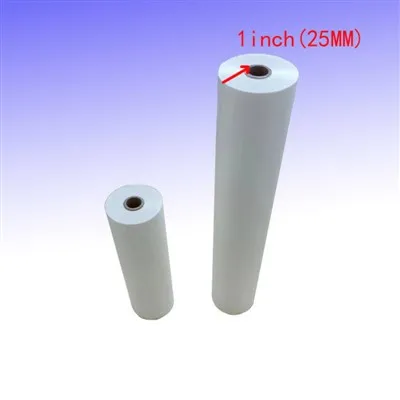
Our commitment to providing high – quality Optical Grade PET Film Roll lies in the meticulous surface treatment process. Each step is carefully monitored and optimized to ensure that the final product meets the stringent requirements of our customers. Whether you need anti – reflection, hard – coated, or anti – glare films for your electronic devices, automotive displays, or other applications, our Optical Grade PET Film Roll can offer the perfect solution.
Soft Touch Laminating Film If you are interested in purchasing Optical Grade PET Film Roll or would like to discuss your specific requirements, please do not hesitate to contact us for a procurement discussion. Our experienced team is ready to provide you with detailed information and excellent service to meet your needs.
References
- "Handbook of Polymer Coatings for Electronics", edited by Hatsuo Ishida.
- "Optical Thin Films and Coatings: From Materials to Applications", by Ronald R. Willey.
- "Adhesion Science and Engineering: Surfaces, Chemistry, and Applications", edited by Leiden University Press.
Yantai Hongqing Packing Material Co., Ltd.
Yantai Hongqing Packing Material Co., Ltd. is one of the most professional optical grade pet film roll manufacturers and suppliers in China, also supports customized service. Welcome to wholesale advanced optical grade pet film roll made in China here and get quotation from our factory. Quality products and reasonable price are available.
Address: Eastern Industrial Park, Taocun, Yantai, Shandong Province, China
E-mail: cindy@ythongguang.cn
WebSite: https://www.hqingnewmat.com/
